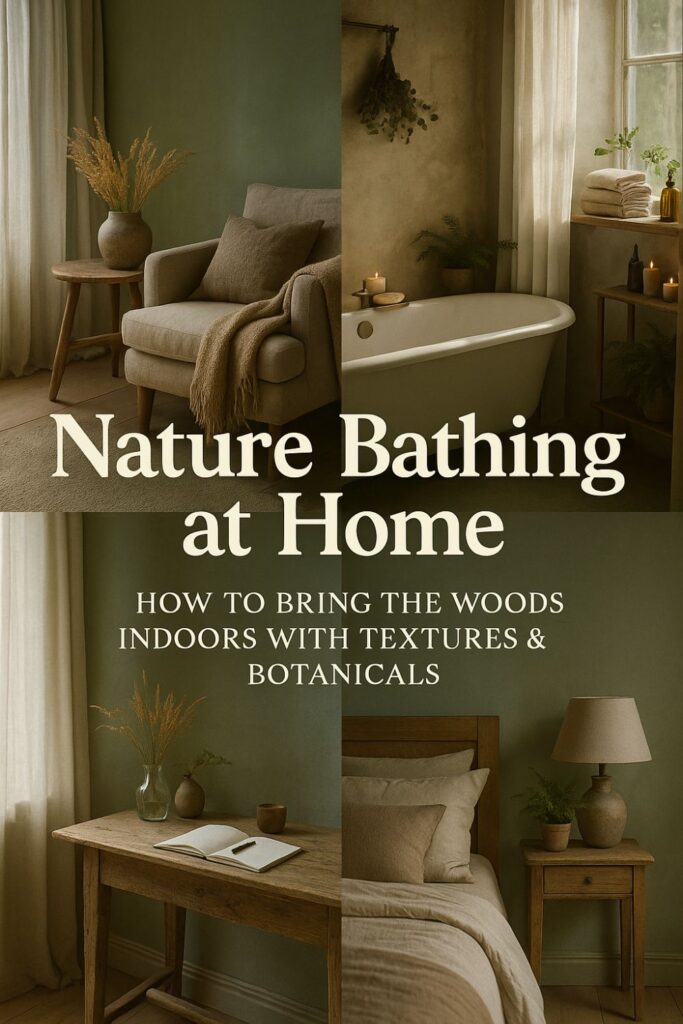
There’s a quiet kind of magic that lives in the forest. The hush of moss beneath bare feet. The scent of pine drifting through soft rain. The feeling that time itself slows among the trees — inviting breath, balance, and belonging.
But what if that sense of renewal didn’t end when you left the woods? What if your home could hum with the same wild stillness — every corner touched by the calm of bark, fern, and filtered light?
This is the art of nature bathing at home — a mindful way of living that weaves the textures and botanicals of the forest into your everyday spaces. You don’t need acres of wilderness. Only an openness to the gentle, grounding beauty that nature offers.
Let’s wander through the ways you can bring the woods indoors, one texture, scent, and green tendril at a time.
1. Start with a sensory palette
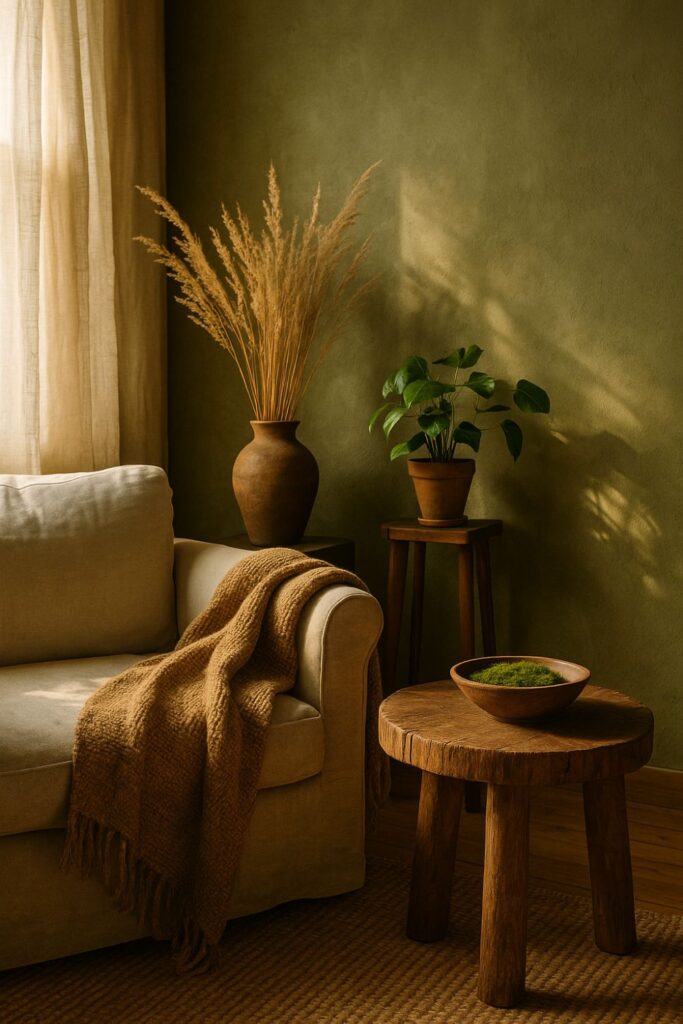
Nature isn’t just something we see — it’s something we feel. To create a home that echoes the forest, begin by thinking beyond colour. Think of texture, temperature, and sound.
Mix natural fibres: rough linen, handwoven jute, felted wool. Place them where your hands linger — along tabletops, on armrests, beneath your feet. Choose textures that remind you of bark, stone, moss.
Wood grain should be visible, not hidden. Let imperfections — knots, splits, whorls — become part of the story.
Even sound has texture. The rustle of dried grasses, the trickle of tabletop fountains, the creak of timber underfoot — all bring layers of forest life into your home.
Why it works: The human nervous system responds to these sensory cues instinctively. Tactile variety helps lower stress, slow the heart rate, and invite presence.
2. Invite natural light to tell its story
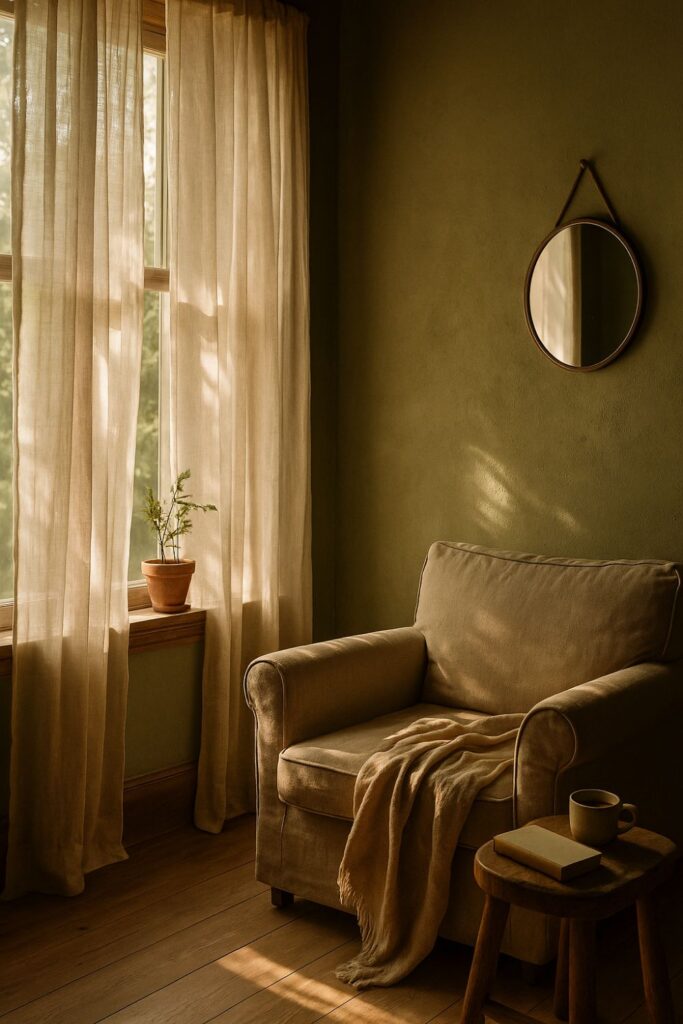
Forest light is never harsh. It filters, dapples, glows. Try to recreate that rhythm indoors.
Replace cold, white bulbs with warm-toned ones that mimic sunset light. Let curtains hang loosely, diffusing sunlight the way fog softens dawn. If privacy allows, leave windows bare and let the day move freely through your space.
Add mirrors to bounce light into shadowed corners, but choose antique or irregular glass — so reflection feels organic, not sterile.
In the evening, use candlelight or beeswax lamps. Their flicker recalls campfire calm.
Why it works: Natural, changing light cues the body’s circadian rhythms, nurturing better rest and emotional balance — key to that peaceful “forest bath” feeling.
3. Layer with living green
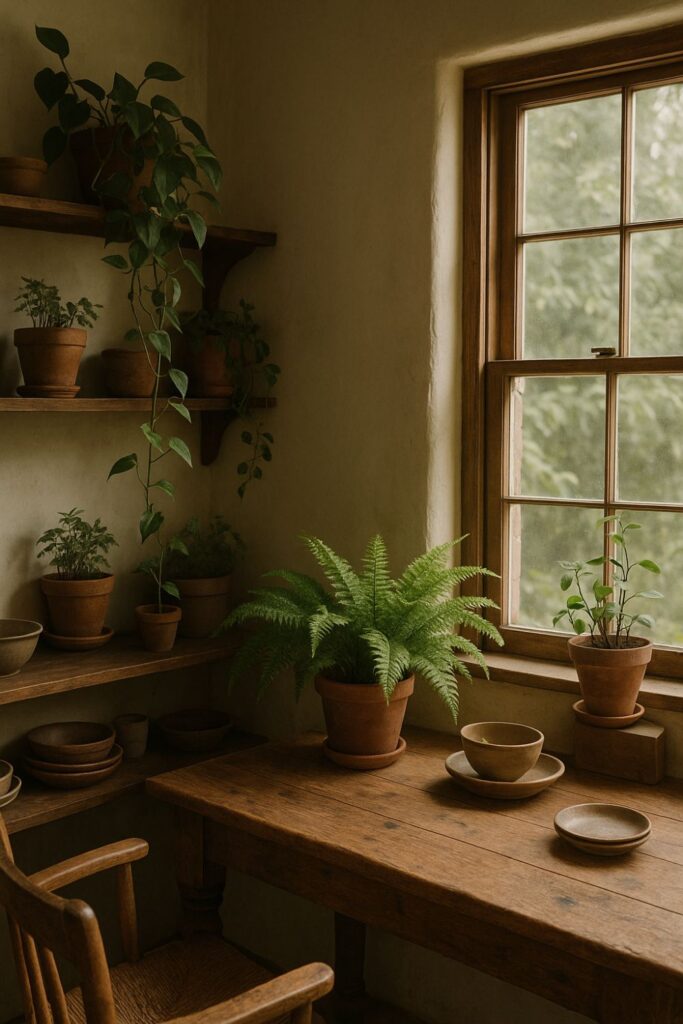
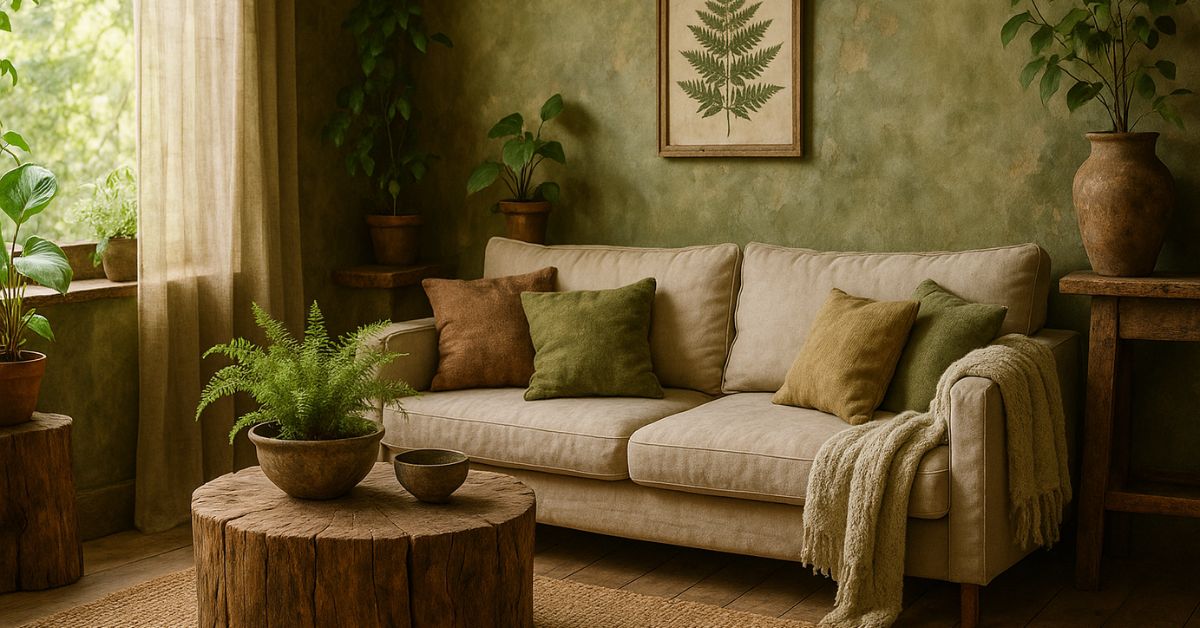
No element connects us to nature more immediately than plants. Whether a single fern or a room full of trailing ivy, living greens act as bridges between the built and the wild.
Start with hardy, forgiving plants: pothos, peace lilies, rubber figs, or ferns. Let them spill from shelves or climb walls on trellises.
Use organic vessels — terracotta, stone, or woven baskets. For a wilder touch, repurpose tree stumps or driftwood as planters.
Cluster plants in uneven groups of three or five, echoing the asymmetry of nature. And mix leaf shapes — broad, feathery, trailing — to mirror the variety of the forest floor.
If your home lacks sunlight, dried botanicals or preserved moss frames can evoke the same earthy calm.
Why it works: Plants clean the air, but more importantly, they shift how a room feels — softening edges, creating stillness, and offering a living rhythm that slows the pulse.
4. Choose a woodland-inspired palette
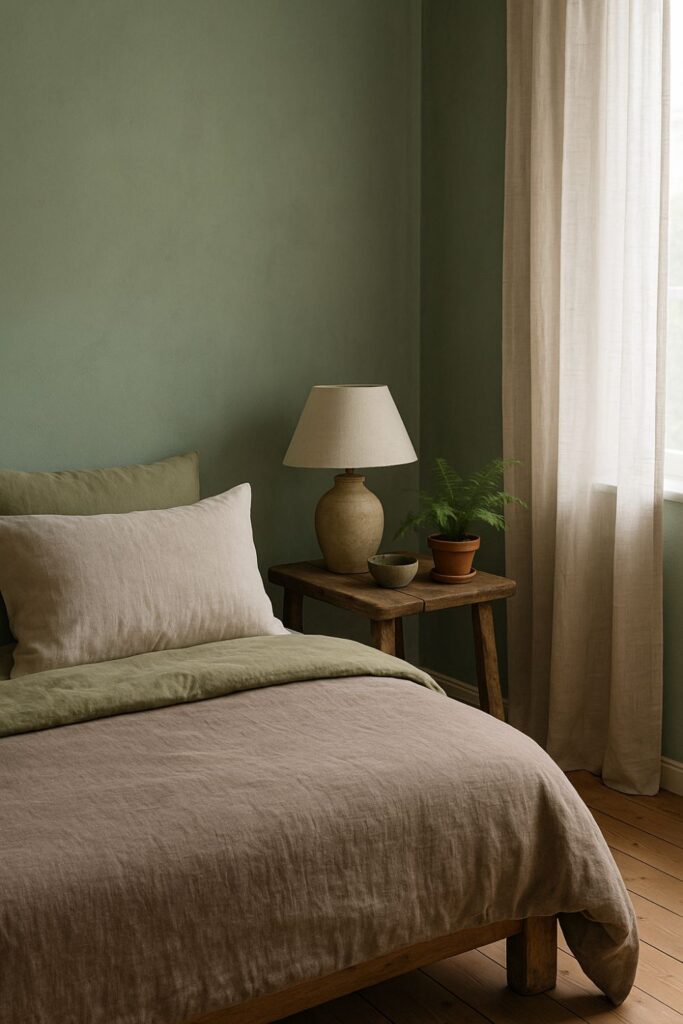
Colour shapes emotion. To bring the woods inside, trade bright whites for tones that whisper of bark, soil, and sky.
Think muted greens (sage, olive, moss), deep browns, charcoal greys, and soft mushroom taupes. Accent with fern or golden ochre to echo sunlight filtering through leaves.
Layer these shades in varying textures — painted walls, clay pottery, wool throws — so your palette feels layered, not flat.
You can even let paint mimic nature’s own gradients. Try a two-tone wall, fading from darker base to lighter top, like mist rising through trees.
Why it works: Earth tones calm the mind and create continuity between the inside and outside world — a subtle but powerful reminder of our place within nature, not apart from it.
5. Bring in the scent of the forest
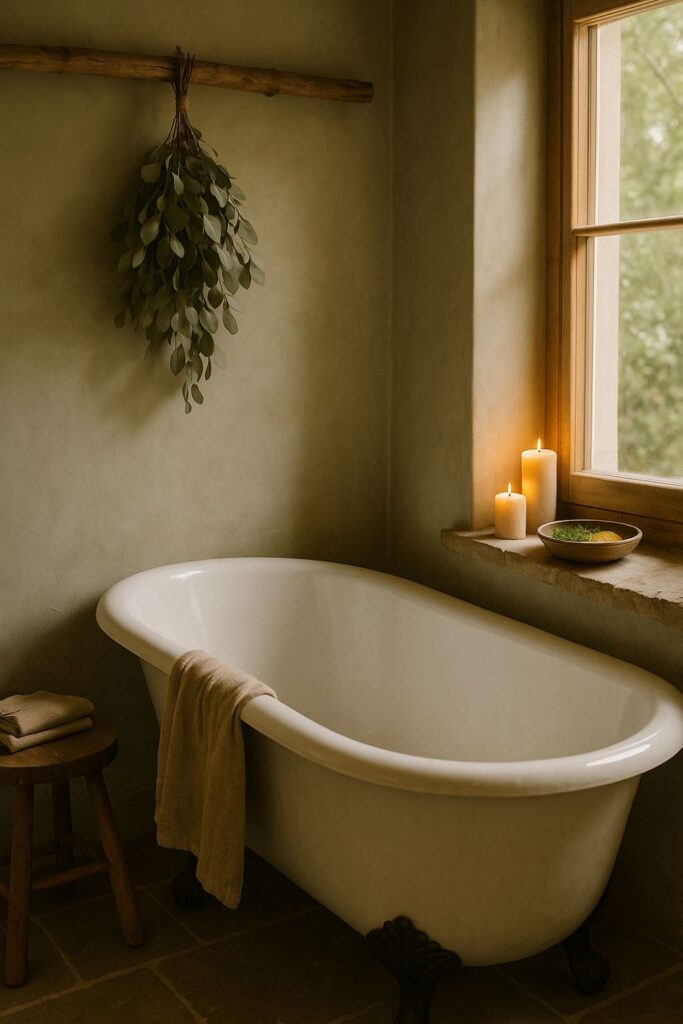
Close your eyes and think of a walk in the woods. You don’t see first — you smell: pine resin, damp moss, crushed leaves, wood smoke.
Scent is the most primal of design tools, and one of the easiest to overlook.
Diffuse essential oils like cedarwood, vetiver, or cypress. Simmer herbs on the stove — rosemary, sage, thyme — to scent the air naturally.
Or create your own forest incense bundle: a mix of dried cedar tips, eucalyptus, and lavender tied with twine. Hang it near a sunny window where it can release its quiet perfume.
Why it works: Earthy aromas activate the brain’s limbic system, triggering relaxation and a feeling of connection — much like a true forest bath.
6. Let materials age gracefully
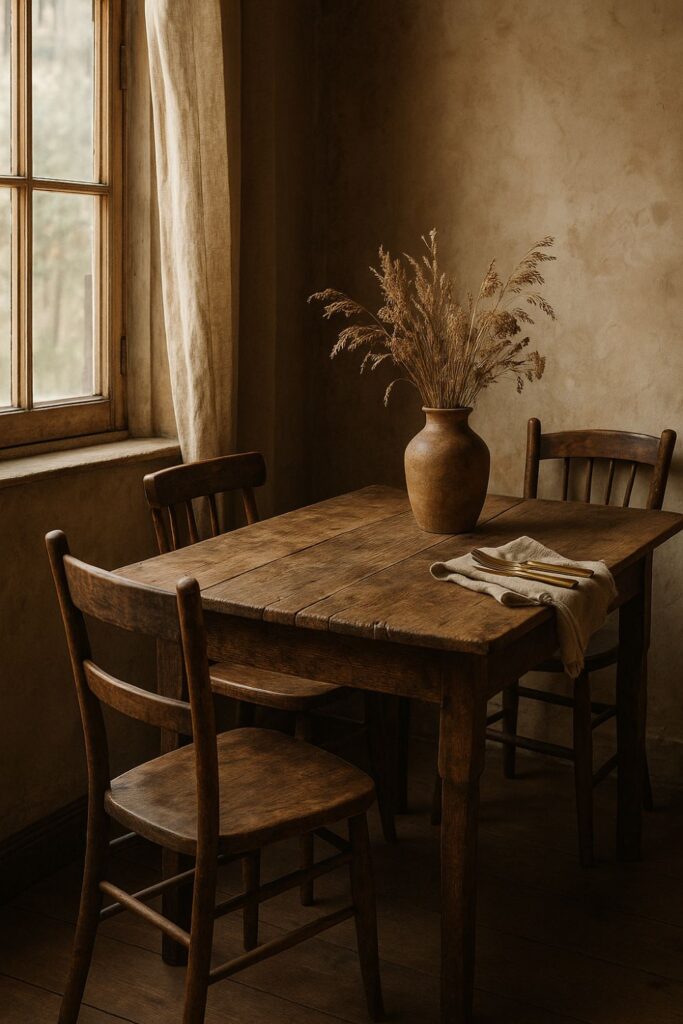
The woods teach us that beauty deepens with time. Moss creeps over stone, bark roughens, branches twist. Your home should honour that same philosophy.
Choose natural materials that evolve: leather that softens, linen that wrinkles, brass that tarnishes. Don’t chase the pristine — embrace the patina.
Allow floors to creak and wood to fade in sunlight. The marks of living — a scratch on a tabletop, a water ring from a mug — become part of your home’s ecosystem.
Why it works: Weathered textures feel human and real. They invite touch and tell stories of time and use — grounding us in the present rather than perfection.
7. Frame nature as art
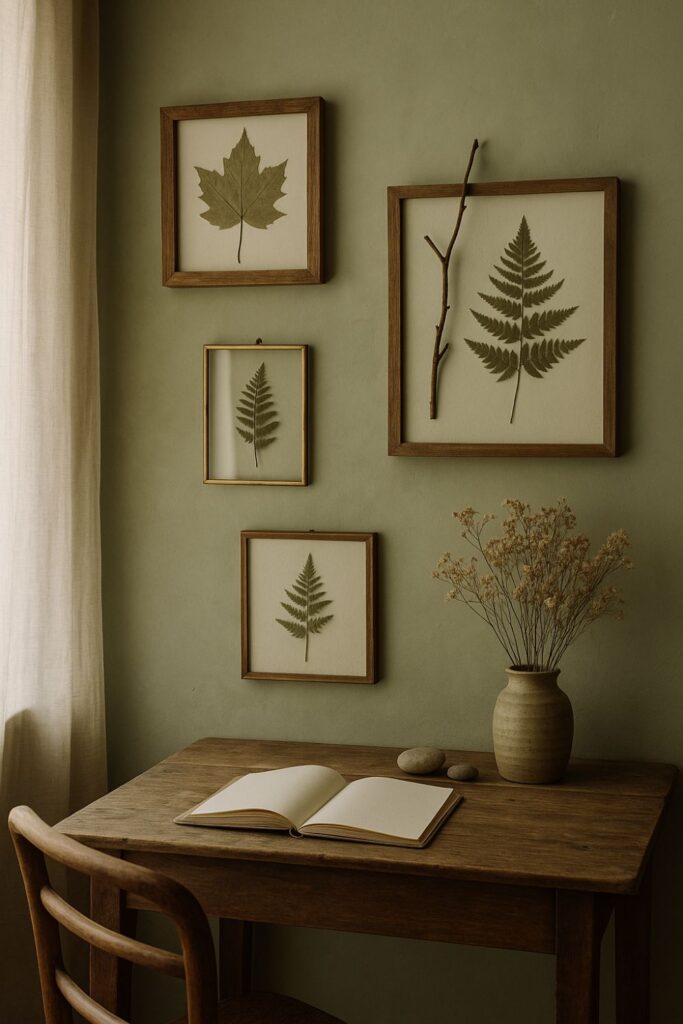
Not every forest moment needs to be literal. Sometimes, suggestion is more powerful.
Hang pressed leaves or botanical prints on textured paper. Frame found feathers or dried seed pods. Display them in clusters, like specimens in a naturalist’s journal.
For a more sculptural effect, arrange twisted branches in tall vases, or suspend driftwood from the ceiling as a hanging installation.
You can even layer small pebbles, pinecones, and moss in glass jars — tiny forest dioramas that change with the seasons.
Why it works: These small acts of reverence create visual anchors — reminders of the outdoors that awaken curiosity and quiet awe.
8. Rewild your rituals
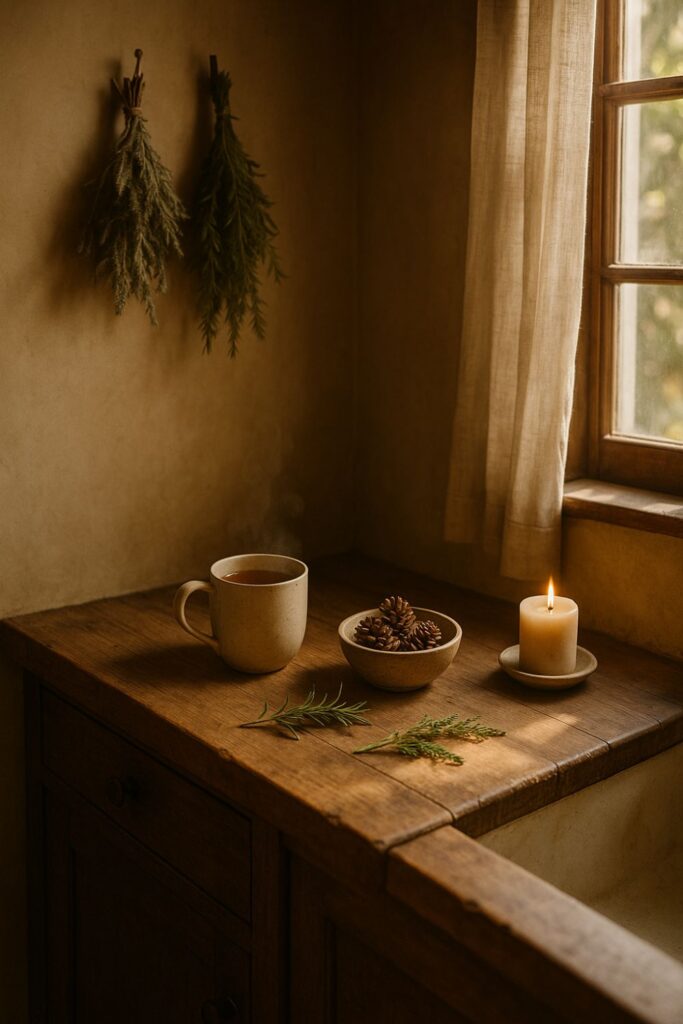
Bringing nature home isn’t just about décor. It’s about rhythm.
Drink your morning tea by the window, watching light shift through leaves. Open doors when it rains. Keep a bowl of pinecones by the hearth in winter and fresh herbs by the sink in summer.
Let daily tasks — folding laundry, lighting candles, watering plants — become grounding moments rather than chores.
Why it works: Mindful rituals connect you to your environment and give everyday moments the same presence you feel when walking through a quiet forest trail.
9. Choose furniture with organic forms
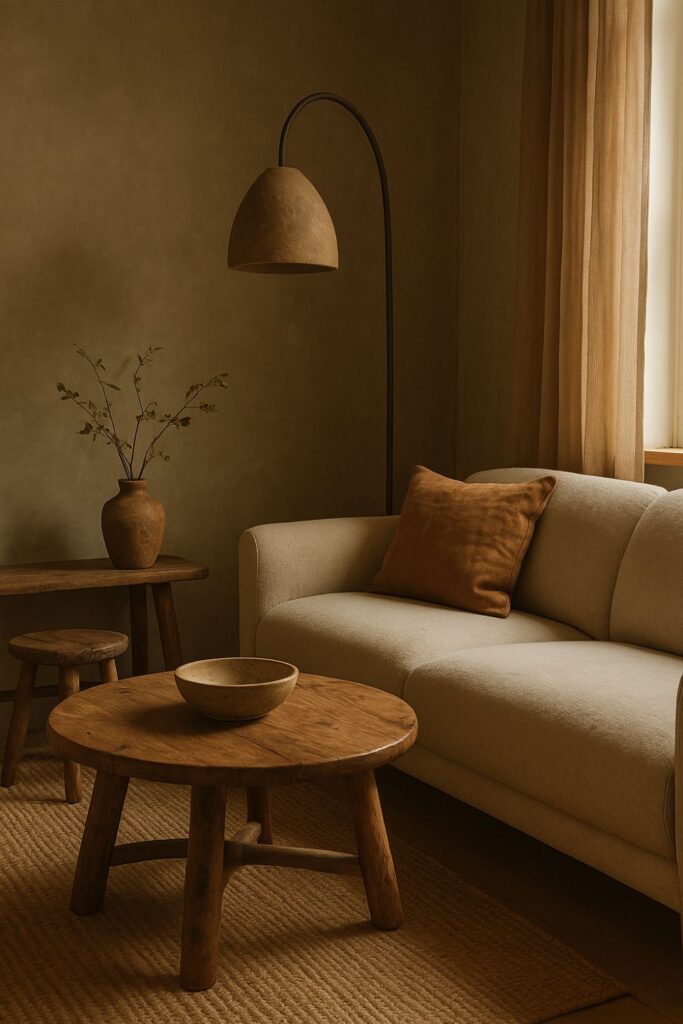
Nature rarely moves in straight lines. Curves and irregularities create comfort — they remind the body of what feels familiar.
Seek furniture that echoes these shapes: round tables, imperfect pottery, carved stools, curved-back chairs.
If your space is modern or minimalist, balance hard lines with soft textiles — a sheepskin throw on a metal chair, a woven mat under glass.
Use reclaimed wood whenever possible — each mark and groove a memory of the tree it once was.
Why it works: Curvilinear and tactile forms create visual harmony, helping the home feel less constructed and more alive.
10. Add a touch of water and movement
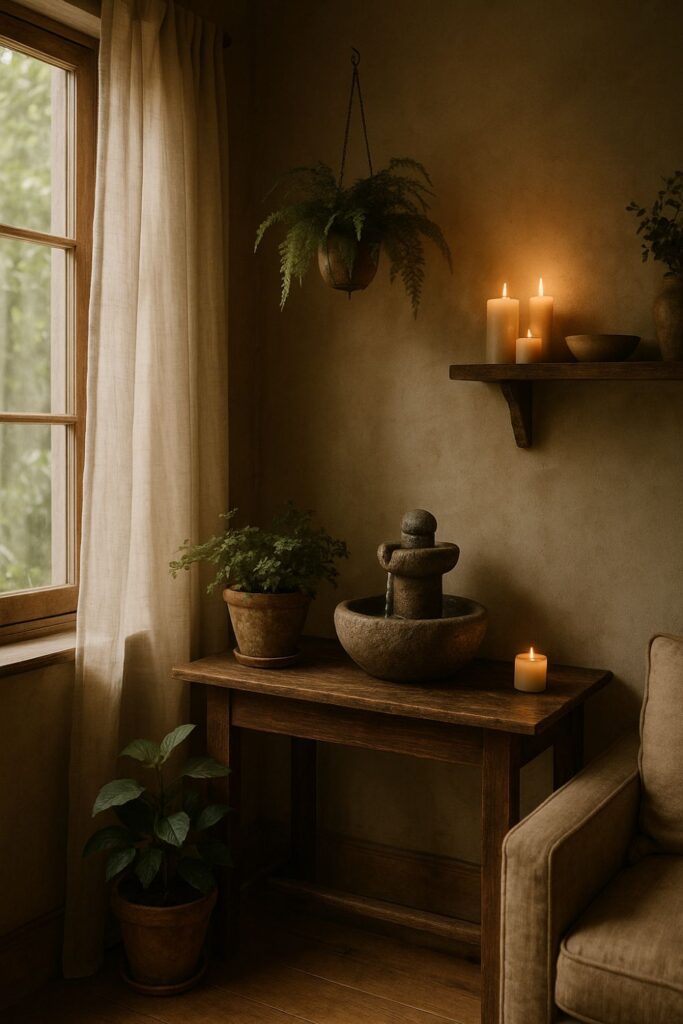
Stillness is beautiful, but movement keeps the senses engaged.
Introduce gentle motion — the drift of a sheer curtain, the sway of hanging plants, or the ripple of a small tabletop fountain.
If you have space outdoors, a rain chain or birdbath near a window adds the soft rhythm of water and life beyond the glass.
Even a simple bowl of floating petals can change the atmosphere of a room — a reminder that nature is not static but ever-flowing.
Why it works: Moving elements mimic the dynamic equilibrium of the forest, keeping your space from feeling staged.
11. Let the seasons flow through your home
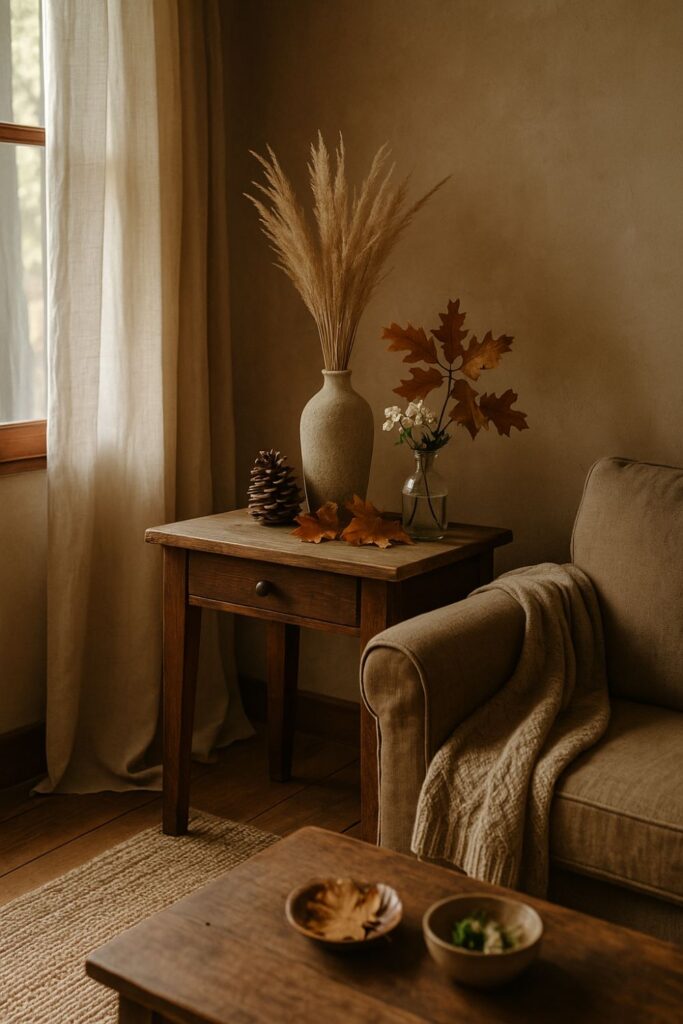
True connection to nature means embracing change. Rotate your décor with the seasons — dried branches and pine in winter, wildflowers in spring, grasses and sun-bleached linen in summer, amber leaves and gourds in autumn.
Change your scents, too: earthy vetiver in winter, floral bergamot in spring, crisp cedar in autumn.
Keep a small basket for seasonal treasures — acorns, stones, shells, fallen leaves — and swap them out as the year turns.
Why it works: Living seasonally reminds us that home is a reflection of the cycles we belong to — steady, imperfect, and always moving.
12. Create a forest-inspired reading nook
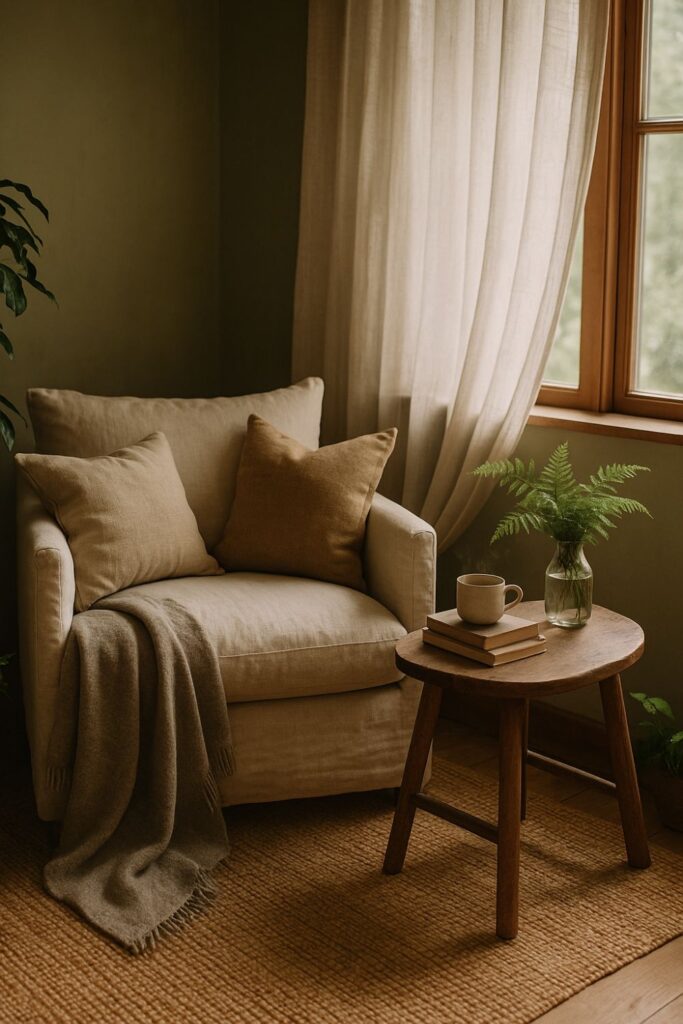
Every woodland wanderer needs a quiet place to rest.
Find a corner where the light falls softly. Layer it with natural fabrics: wool blankets, linen cushions, a jute rug. Add a small side table for tea and a vase of greenery.
A rattan chair or wooden bench works beautifully, especially when paired with a forest-toned throw.
Surround the space with books about nature, slow living, and mindfulness — a personal library of calm.
Why it works: Having a dedicated still space deepens your relationship with nature-inspired living and encourages intentional rest.
13. Gather your grounding textures
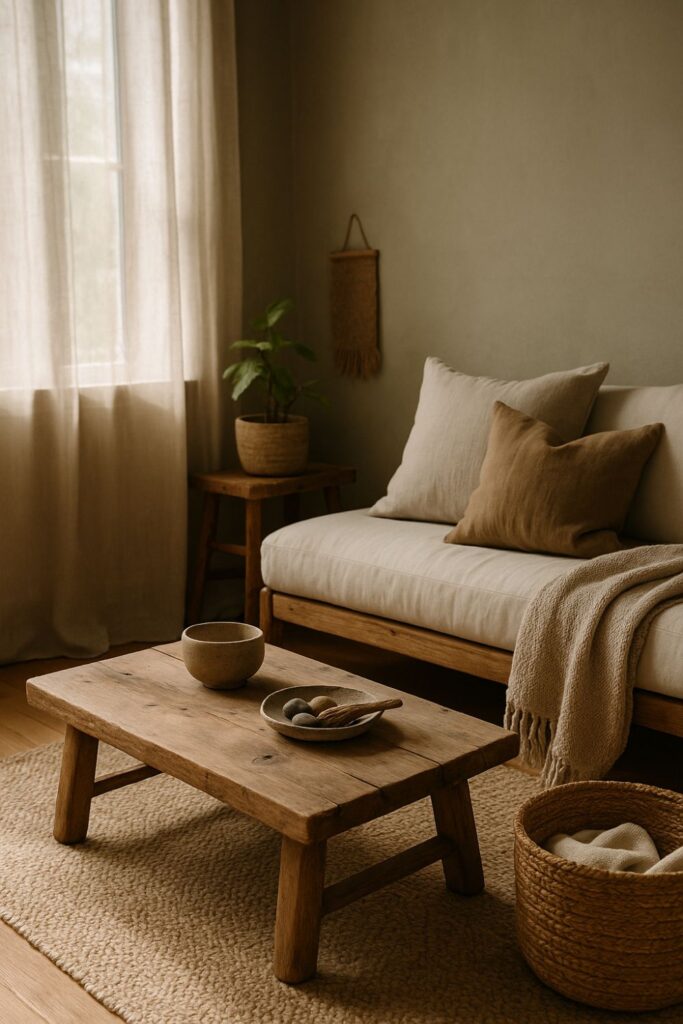
When decorating, think like a forest floor — layered, uneven, organic.
Place a sisal rug underfoot. Stack woven baskets filled with logs or wool. Mix matte ceramics with polished wood.
For walls, limewash or clay paint creates a softly weathered look that catches light like stone.
And wherever possible, touch nature directly — driftwood mantlepieces, pebble trays under candles, or river stones lining a shelf.
Why it works: Layering natural textures creates visual warmth and a tactile depth that synthetic materials can’t replicate.
14. Make your bathroom a woodland retreat
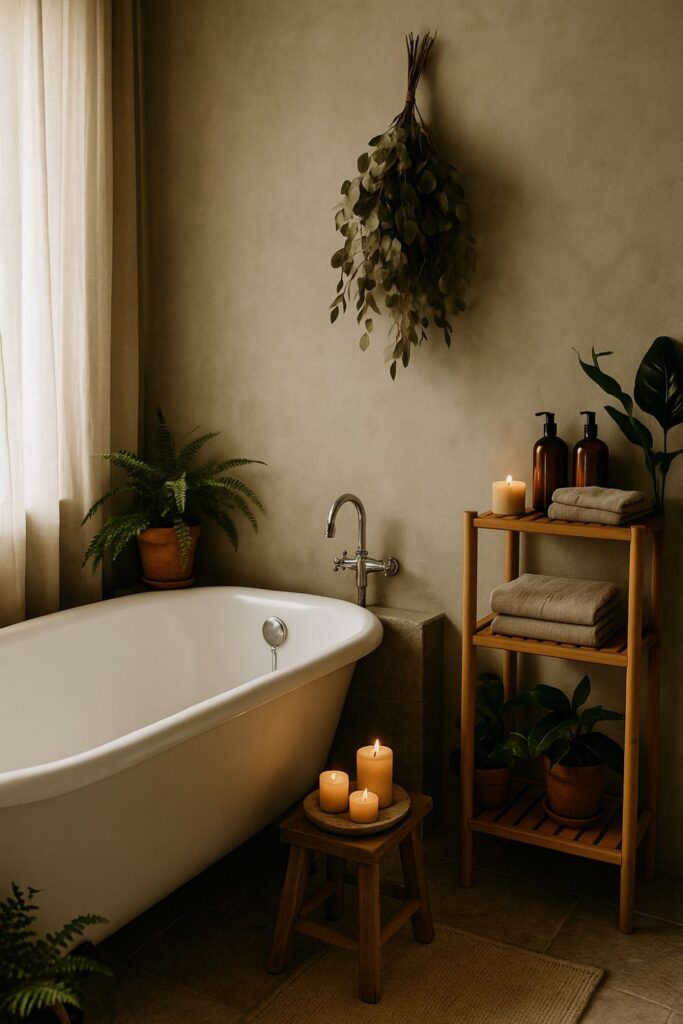
The bathroom is an ideal space for daily “nature bathing.”
Replace synthetic scents with essential oil diffusers. Add bamboo shelves, stone soap dishes, and leafy plants that love humidity — like pothos or Boston ferns.
Use towels in muted, earthy tones and a wooden bath tray for candles and herbal tea.
For an extra ritual, hang eucalyptus branches in your shower — their steam-activated oils turn bathing into a forest-scented experience.
Why it works: The sensory mix of water, warmth, and botanical scent activates the same restorative pathways as a walk through misty woods.
15. Let the outdoors spill in
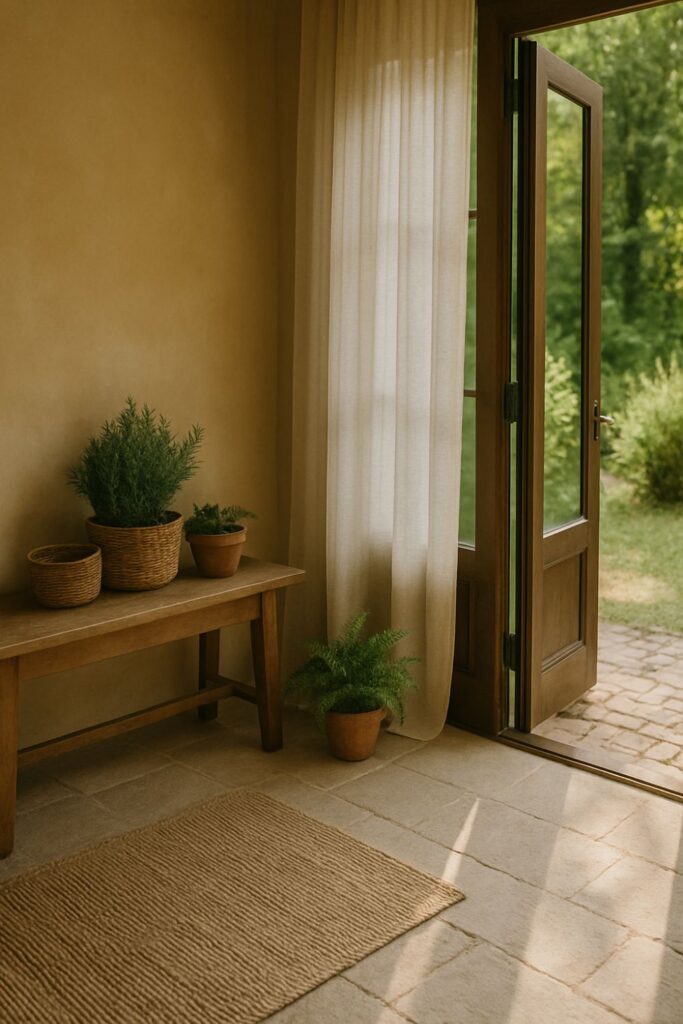
If you have windows or doors that open to green space, make them part of your interior design.
Frame views with minimal drapery. Align furniture so you’re drawn toward the outside.
Even small balconies or courtyards can become extensions of your nature-bathing home — with potted herbs, wooden seating, and twinkling solar lights.
Keep thresholds open, both visually and energetically. When indoors and outdoors flow into each other, the whole home feels lighter, freer, and more alive.
Why it works: Blurring the boundary between house and nature dissolves stress and invites that feeling of quiet belonging that only the forest brings.
16. Honour imperfection
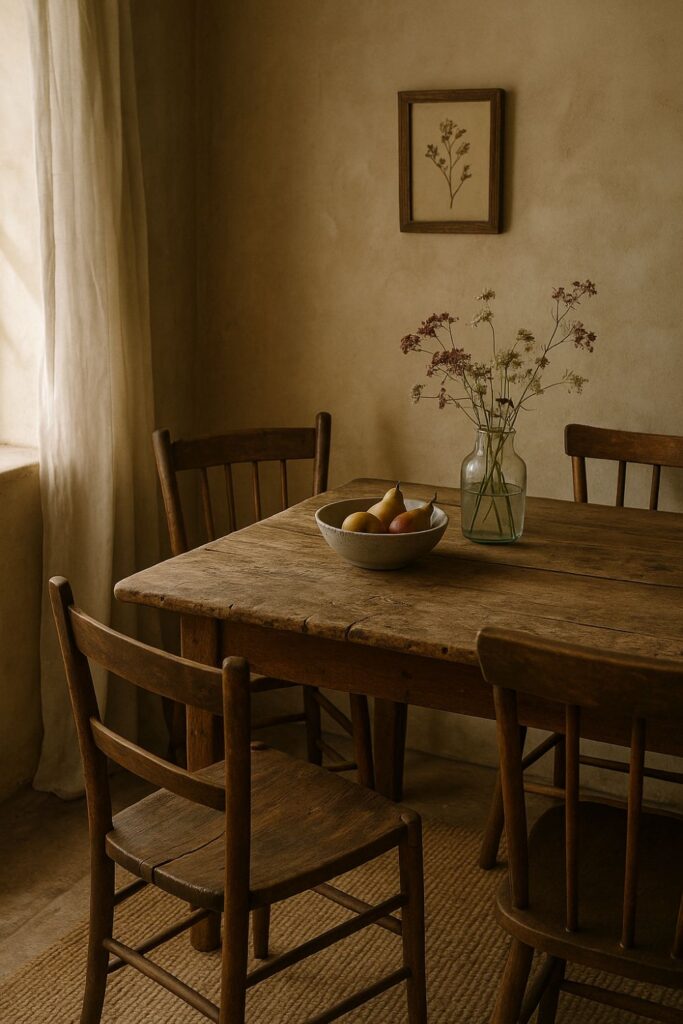
Nature never apologises for asymmetry. A gnarled tree, a cracked rock, a leaning branch — each is complete in its irregularity.
Bring that spirit home. Choose hand-thrown ceramics, uneven weaves, mismatched woods. Hang art slightly off-centre. Let each object breathe.
You’ll find that imperfection, when embraced, creates harmony far deeper than perfection ever could.
Why it works: Wabi-sabi — the Japanese philosophy of finding beauty in impermanence — reminds us that our homes, like the forest, are living, changing entities.
17. Rest in the quiet
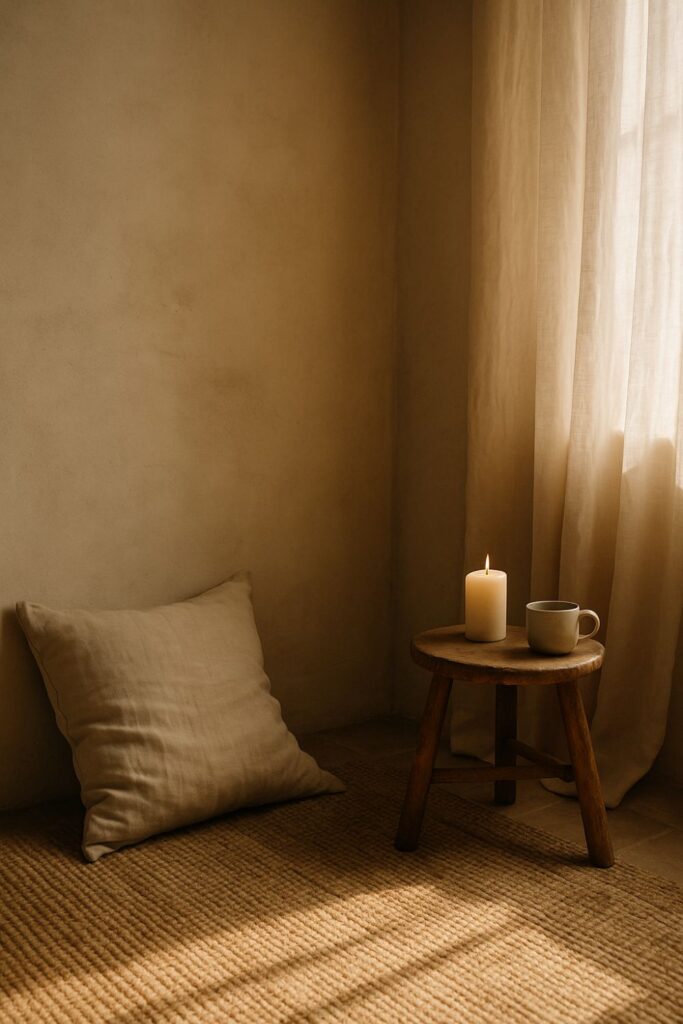
Ultimately, nature bathing at home isn’t about objects. It’s about how a space makes you feel.
Create moments of quiet. Leave some corners empty. Listen to the hum of the house at dusk, the creak of wood, the sigh of leaves outside.
These small pauses — these moments of stillness — are the heartbeat of nature brought indoors.
Why it works: Silence is as vital as sound in a nature-rich home. It lets your senses reset and your mind slow to the rhythm of the natural world.
18. Begin with gratitude
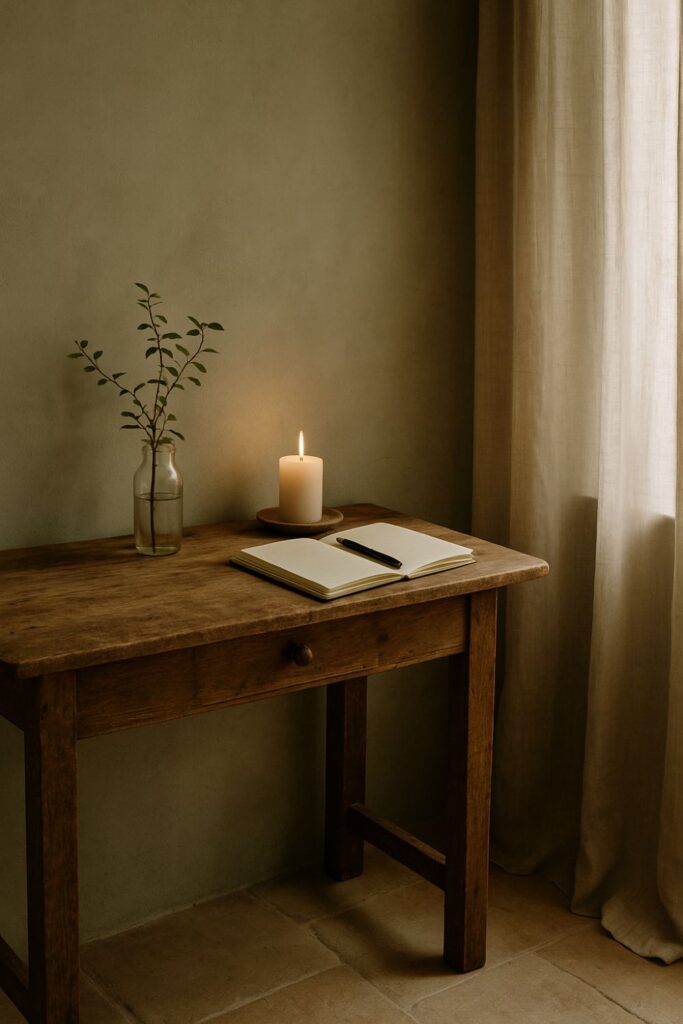
When you next water your plants, open a window, or light a candle of cedarwood — pause. Feel the air, the scent, the presence of living things.
Gratitude turns a room into a sanctuary. It transforms a home into a living forest of small wonders.
That’s the true essence of nature bathing — not just surrounding yourself with beauty, but belonging to it.
Conclusion
In a world that rushes, the forest always whispers, slow down. When you let the woods live within your walls, you carry that whisper with you — in every breath, every touch, every quiet moment.
Your home becomes a wild haven. A soft place to return, to listen, and to belong.
For more slow-living inspiration and rustic home ideas, follow Elowen Wild on Pinterest — or sign up for the newsletter at elowenwild.com/subscribe to receive seasonal moodboards and styling guides delivered to your inbox.