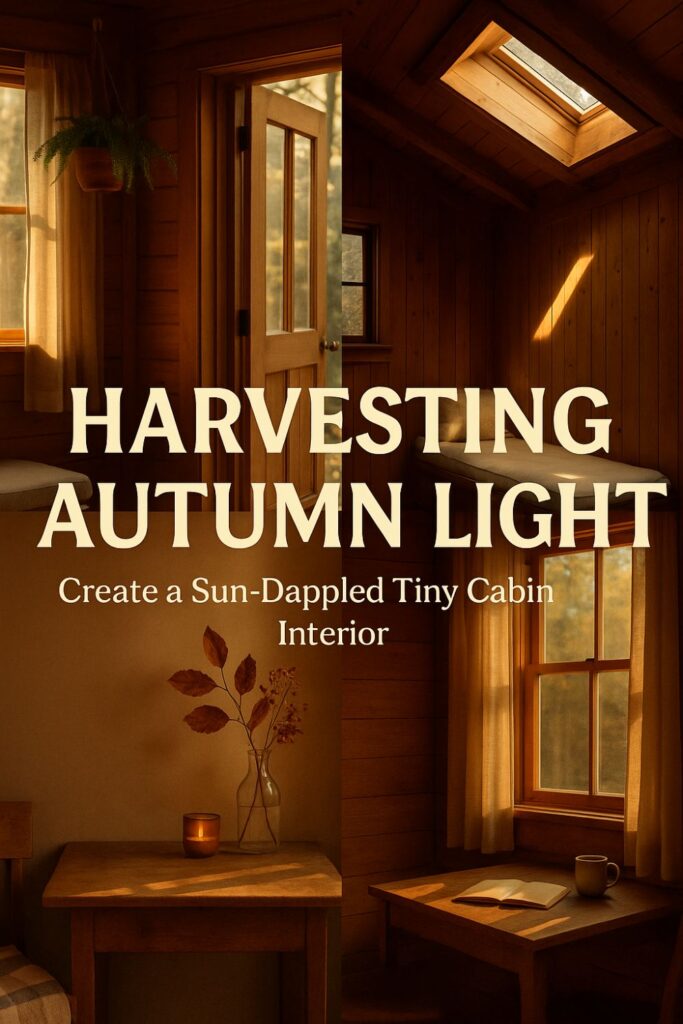

“Light is the quiet architect of mood — and in autumn, it paints everything gold.”
There’s something sacred about the way autumn sunlight finds its way into a cabin. It filters through amber leaves, pools softly on pine floors, and lingers like a whispered secret. In a tiny home, this light becomes more than ambience — it’s a way of living.
To harvest autumn light is to understand its rhythm. The tilt of the sun, the reflective warmth of wood, the soft gleam of brass and linen. It’s about slowing down, noticing where the light falls, and shaping your space to welcome it in.
Here’s how to create a sun-dappled interior that feels like a forest morning — golden, grounded, and alive.
1. Let the morning in
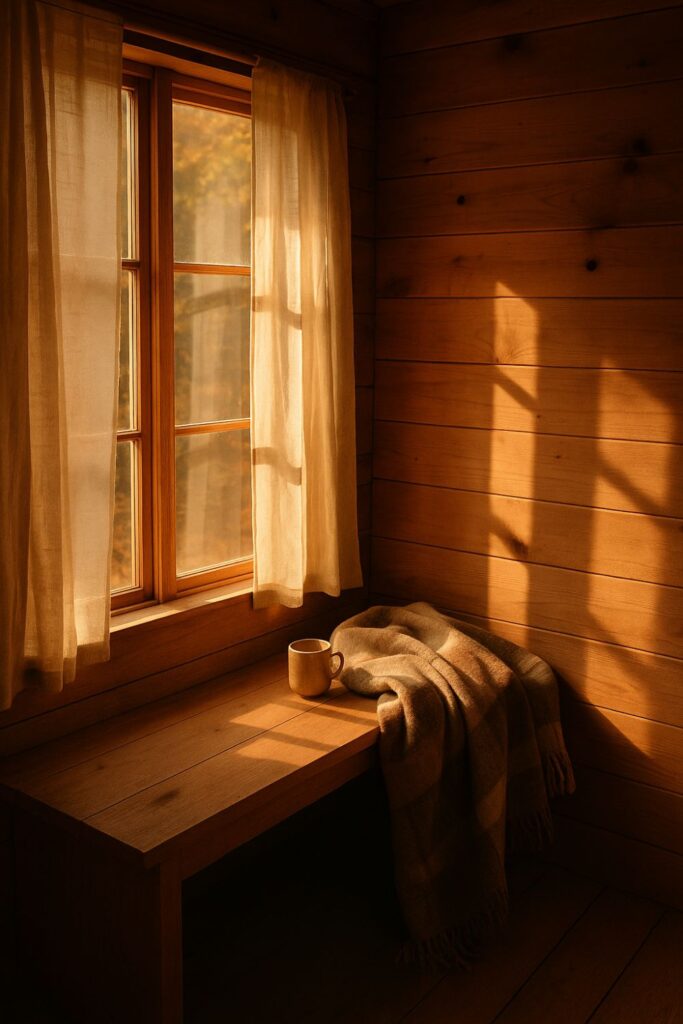
The best way to begin is with intention. Observe where your windows face and how the light moves through them from dawn to dusk. East-facing windows catch the first glow — pale and crisp — while west-facing ones gather the burnished warmth of sunset.
In tiny homes, every window matters. Keep them clear of heavy curtains and clutter. Opt for sheer linen or cotton gauze that softens the light without dimming it. The goal is to let the morning pour in like honey, touching every surface with quiet brightness.
Why it works: Natural light not only enlarges a small space visually, it also nurtures your circadian rhythm and anchors your day. The cabin feels awake — even before you are.
2. Choose a palette that glows
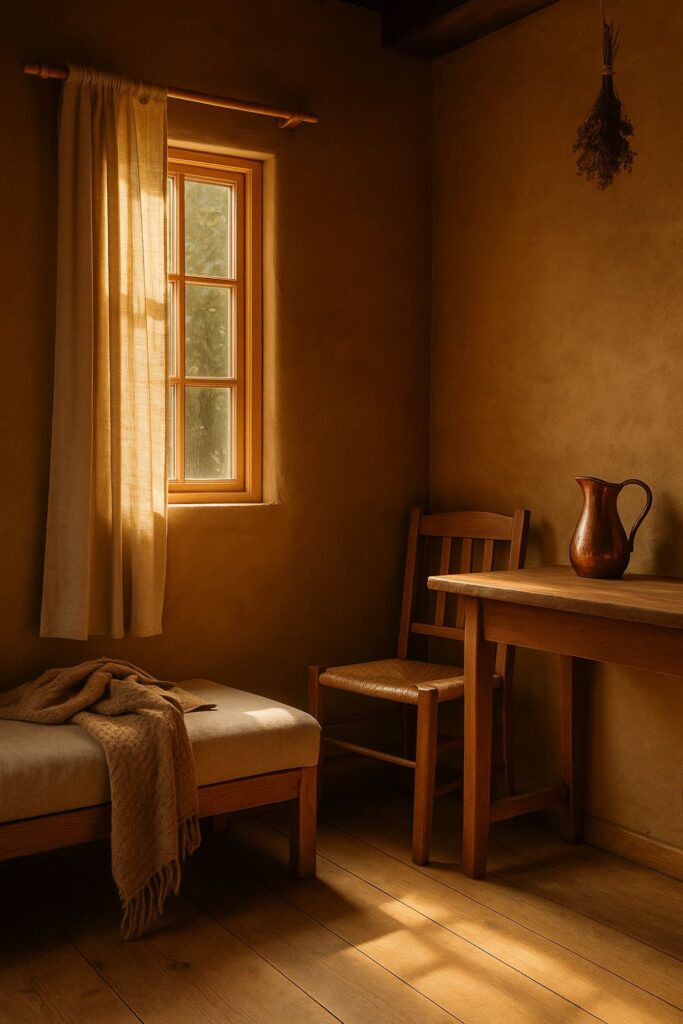
Autumn light deserves colours that love it back. Think muted ochres, clay tones, soft creams, and the green-brown of moss. These shades don’t fight for attention — they reflect and absorb the sun in gentle harmony.
Matte finishes and chalk paints catch light differently than gloss. A clay-based wall paint will diffuse the glow, wrapping the room in a velvety warmth that feels almost tangible.
For accents, consider raw linen, caramel leather, or weathered copper. These textures echo the natural world, inviting the golden tones of late afternoon deeper into your home.
Why it works: The right palette turns sunlight into décor. Every shade plays a part in diffusing and deepening the warmth of the day.
3. Frame the light with wood
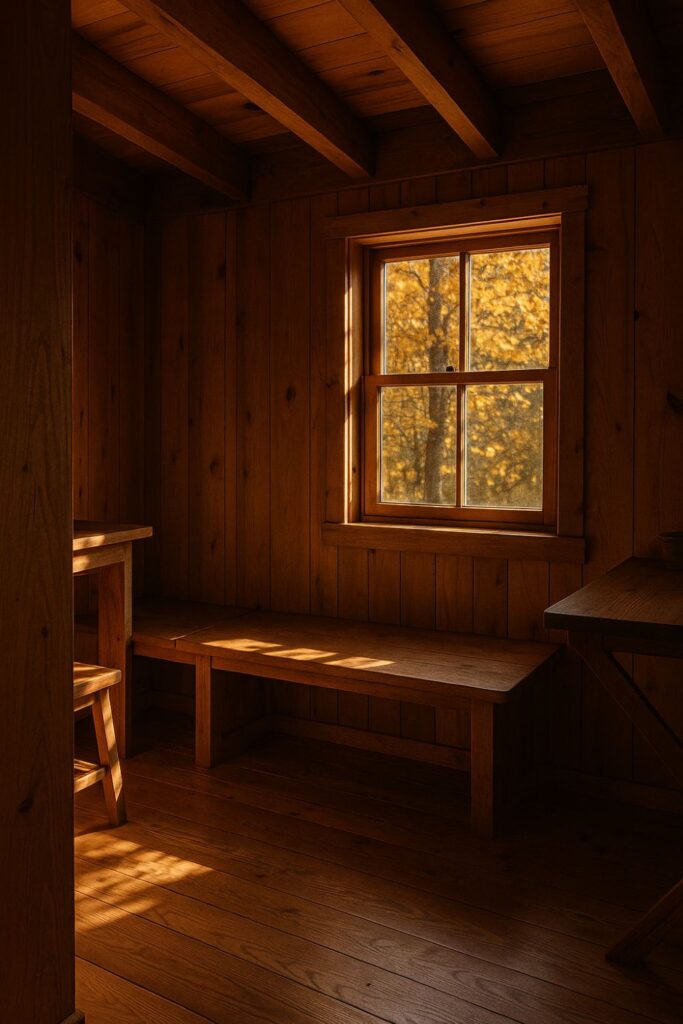
Wood loves light. It shifts in tone as the day passes — pale and silvery at dawn, rich and golden by dusk. Choose natural finishes over lacquered ones to allow that dance to show through.
Light oak, ash, or pine create an airy base, while walnut or cedar add contrast without heaviness. In a tiny cabin, balance matters — use darker timbers only where they anchor the space, like floors or trim.
If you’re building or remodelling, consider a wooden ceiling with visible beams. The play of light across those surfaces adds depth and rhythm — as if the cabin itself breathes with the sun.
Why it works: Natural materials mirror the changes of the season. As light shifts, so does the room, keeping your space alive with quiet movement.
4. Use mirrors as sunlight companions
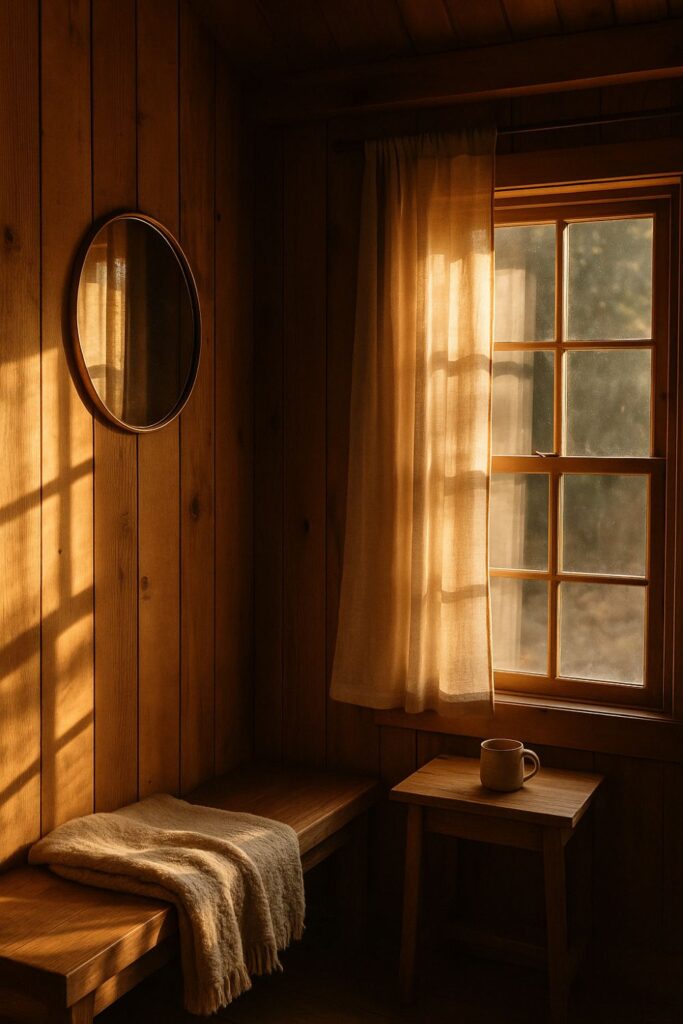
Mirrors can double the light in a room — a quiet trick for small cabins. But beyond reflection, they shape mood. Position one opposite a window to pull light deeper into the space, or beside a warm-toned lamp to echo its glow.
Round or irregular mirrors feel softer than rectangles. Choose frames in wood, brass, or rattan to keep the organic rhythm intact.
You might even hang a small mirror near the floor or above a low shelf. When the afternoon sun hits it just right, it will cast a wandering shimmer across the walls — like sunlight through leaves.
Why it works: In tiny spaces, mirrors multiply not just the light but also the sense of openness, creating movement and air where there’s little room to spare.
5. Let your windows breathe
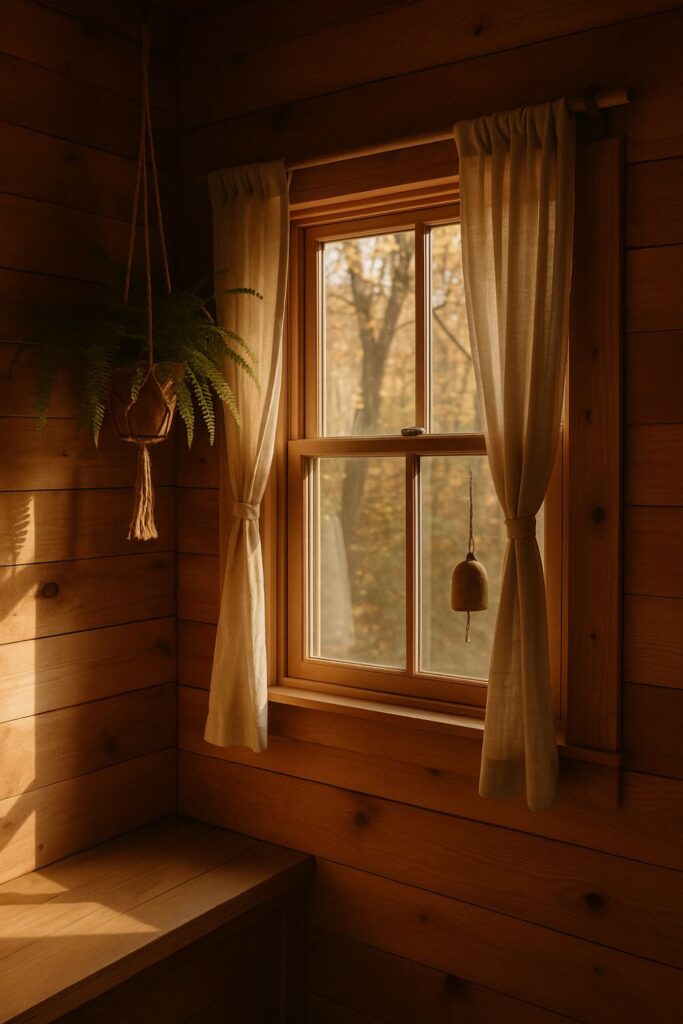
A cabin’s windows are its eyes to the wild. Dress them simply. Instead of blinds, use tie-up linen panels or lightweight Roman shades that can be rolled high. The more glass you reveal, the more light you welcome.
If privacy is a concern, consider frosted lower panes or a row of small top windows that let in daylight without exposing the interior.
Add small details that frame the view: a hanging plant catching the glow, or a ceramic wind chime turning in the breeze. Each touch softens the line between indoors and out.
Why it works: When light isn’t blocked, your cabin feels less like a box and more like a breathing organism — porous, alive, and connected to the day.
6. Layer your lighting for twilight
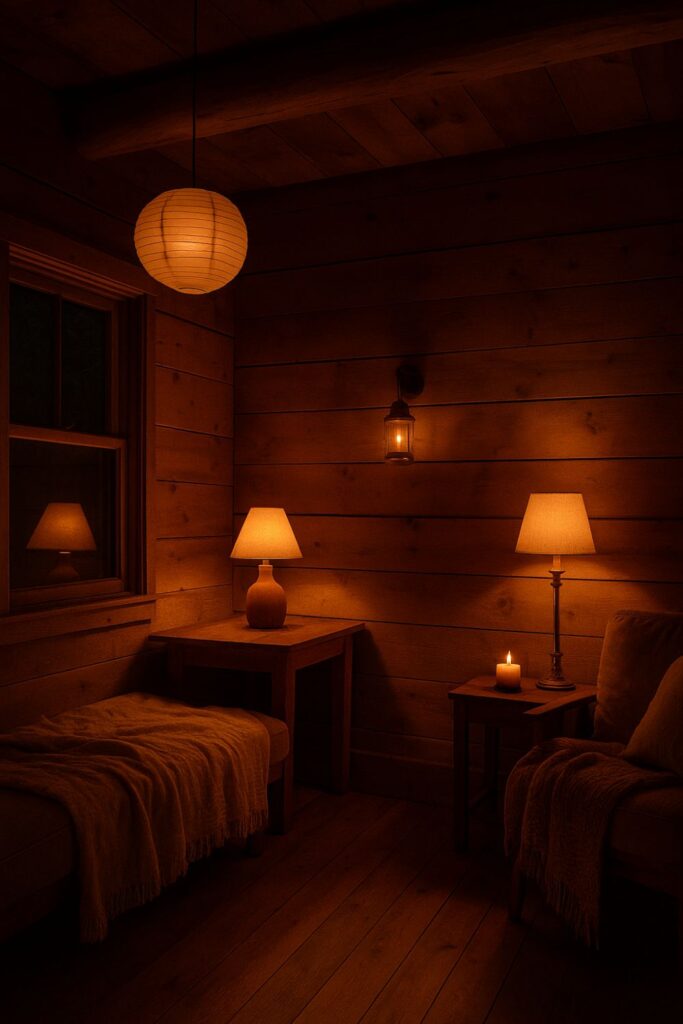
Autumn light doesn’t last forever. As dusk falls, the cabin should transition softly, without a jolt into artificial glare.
Layered lighting is key. Combine low pendant lamps, wall sconces, and small table lights with warm bulbs. Aim for tones between 2200–2700K — the range where light feels like a fading fire.
Paper shades, glass lanterns, and vintage-style filament bulbs all add texture. Hide harsh LEDs behind diffusers or amber-tinted glass.
If you’re living off-grid, solar lanterns and rechargeable LED candles can create the same warmth without wiring — a perfect fit for tiny living.
Why it works: Light layering keeps the spirit of sunset alive indoors, easing the transition between day and night while maintaining that dappled, golden calm.
7. Invite nature’s reflectors inside
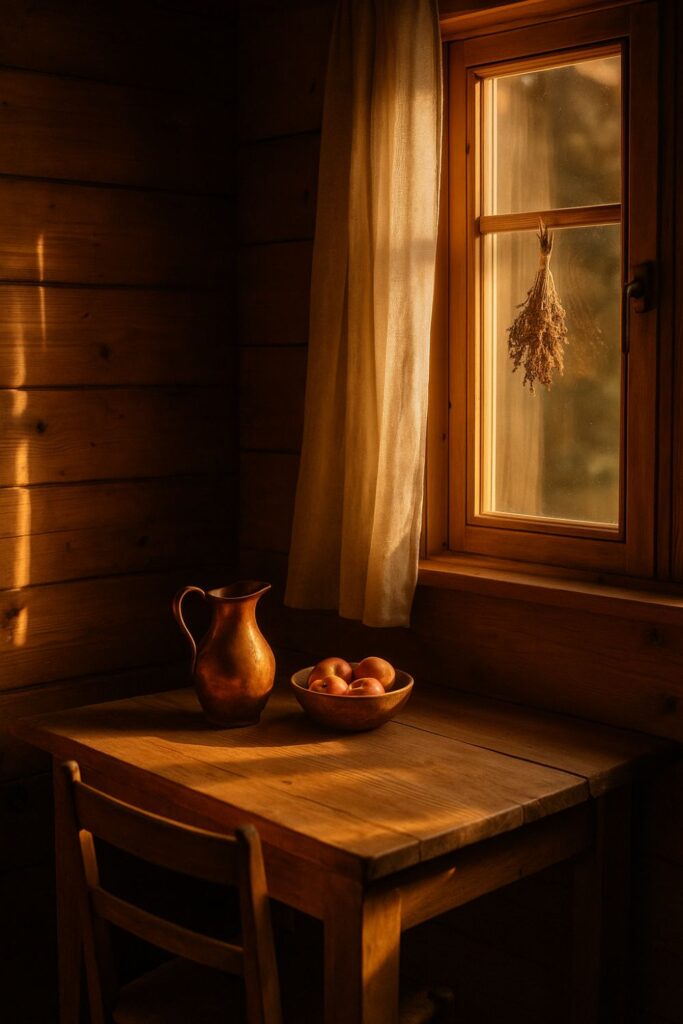
To truly harvest autumn light, bring in surfaces that interact with it. A glazed jug, a polished stone, or a copper teapot — these objects don’t dominate a room, but they shimmer just enough to make light linger.
Hang a cluster of dried herbs near the window; their textures will catch the light in unexpected ways. A bowl of apples or quinces can do the same, their skins glowing softly like embers in the afternoon sun.
Avoid too much shine — the magic lies in subtlety. Think of your home as a forest floor after rain: glistening here and there, but never bright enough to dazzle.
Why it works: Reflective textures in natural materials amplify sunlight in a way that feels organic, turning the smallest glow into quiet drama.
8. Capture sunlight through fabric and texture
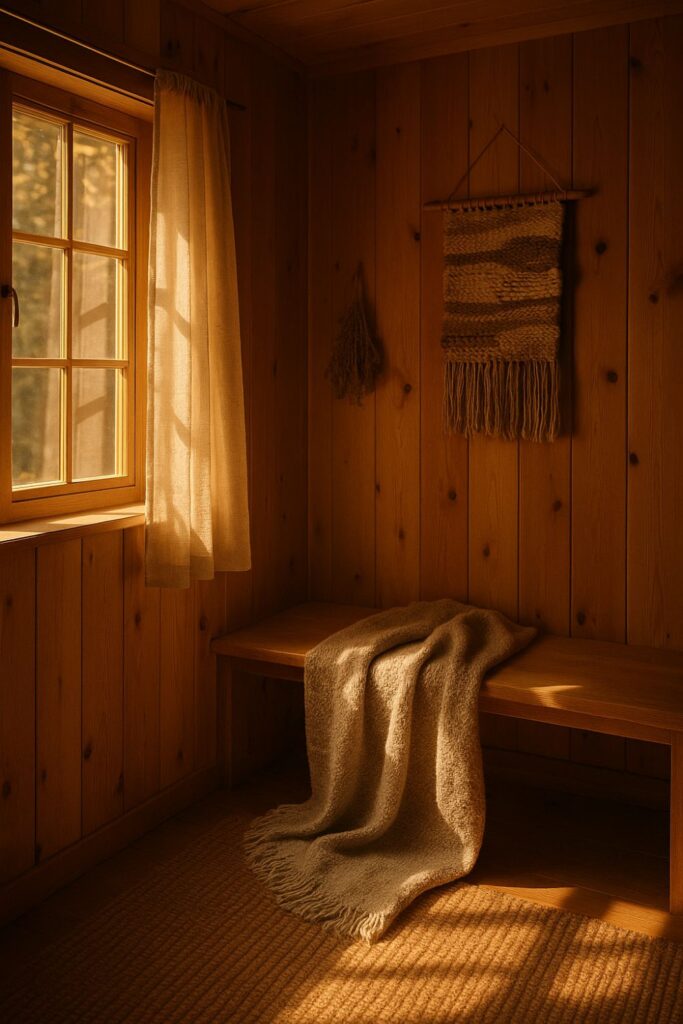
In a small space, textiles shape how light behaves. Linen, jute, wool, and cotton all filter brightness differently. A woven wall hanging might soften a glare, while a fringed throw creates tiny shadows that ripple with every flicker of sunlight.
Opt for natural fibres in earthy tones — rust, oatmeal, soft amber. Let them drape casually, as if placed by the breeze. Avoid synthetic sheens that flatten the play of light.
In autumn, even a single well-placed wool blanket can change the tone of a room, echoing the muted glow outside.
Why it works: Texture catches light in gentle irregularities, creating warmth and visual movement. Every shadow tells a small story of the day passing.
9. Design around the sun’s path
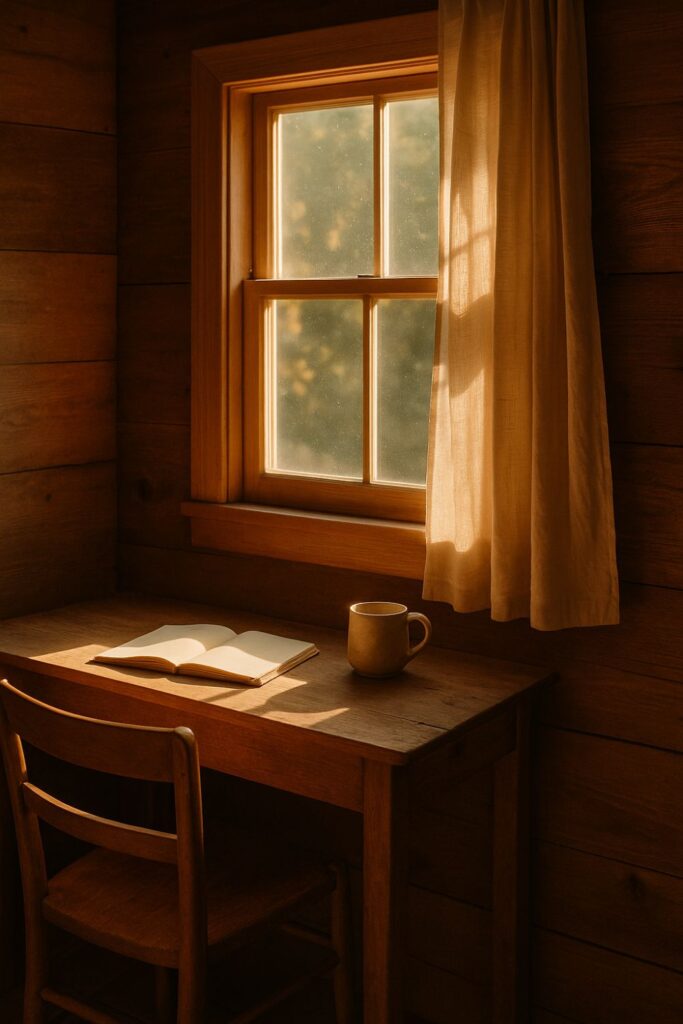
In tiny living, function and feeling must coexist. Position your workspace, reading nook, or dining table where the light naturally falls during your favourite time of day.
A morning person might place a writing desk near an eastern window. A night owl might set up an evening corner facing west, where the setting sun brushes the walls in amber tones.
If your home is movable — like a van or small cabin on wheels — think of light as your compass. Park with your windows facing the direction that suits your rhythm best.
Why it works: When your daily tasks align with the sun’s rhythm, the home feels in sync with nature — less mechanical, more human.
10. Create a golden-hour ritual
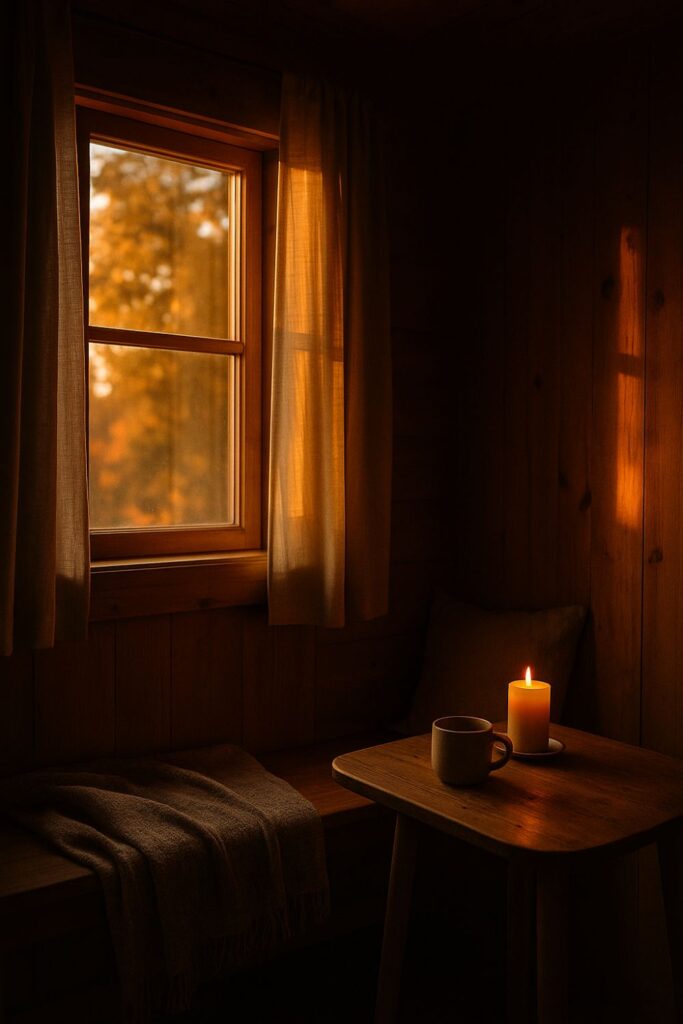
There’s a time every evening when the world feels suspended in gold. Make it your ritual. Brew tea, open a window, light a single candle, and let the last rays wash over your space.
You might keep a small journal nearby, noting what the light touched that day — the rim of a cup, the folds of a blanket, the outline of a fern. These quiet observations anchor you in presence.
Add a few ritual details: a handmade mug, a scent of woodsmoke, or the soft rustle of a linen curtain. The light will find these things and hold them close, like memories.
Why it works: Ritual turns light into meaning. The cabin becomes a companion, reflecting your inner stillness as day becomes dusk.
11. Balance shadow and glow
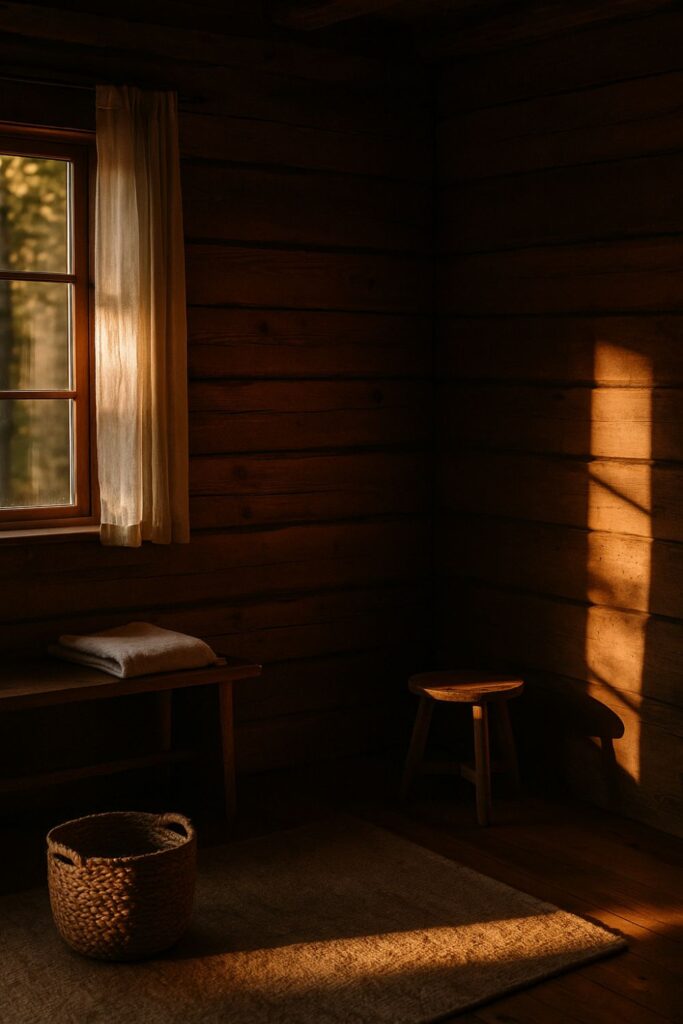
To honour light, you must also honour shadow. In autumn, darkness arrives gently — not as absence, but as texture. Let corners stay dim, let the contrast breathe.
Avoid over-lighting your space. A few areas of darkness can make the lit parts glow even more deeply.
Use natural materials to temper the contrast: a wool rug that drinks up shadow, a woven basket that breaks the glare, a wooden stool that seems to glow from within.
Why it works: Light and shadow are not opposites — they are partners. Together, they make a space feel alive, layered, and real.
12. Add a skylight or lightwell
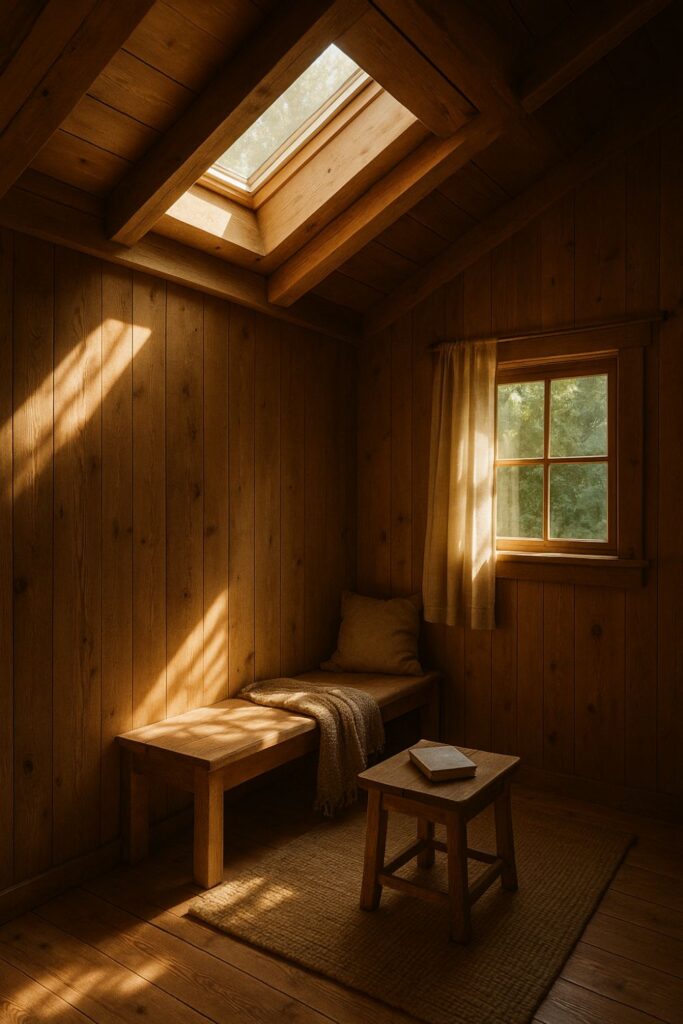
If your cabin design allows, a small skylight can transform how the room feels. Overhead light feels different — softer, more diffused. It creates the sense of sitting under a forest canopy where light filters down in shifting beams.
A strategically placed skylight above your bed or kitchen can track the day’s passage in silence. Even cloudy days feel luminous when light enters from above.
In rental or prefab tiny homes, a lighter ceiling paint or mirrored upper panel can mimic this effect without renovation.
Why it works: Overhead light connects you to the wider sky, giving even the smallest home a sense of height and openness.
13. Keep clutter low and simple
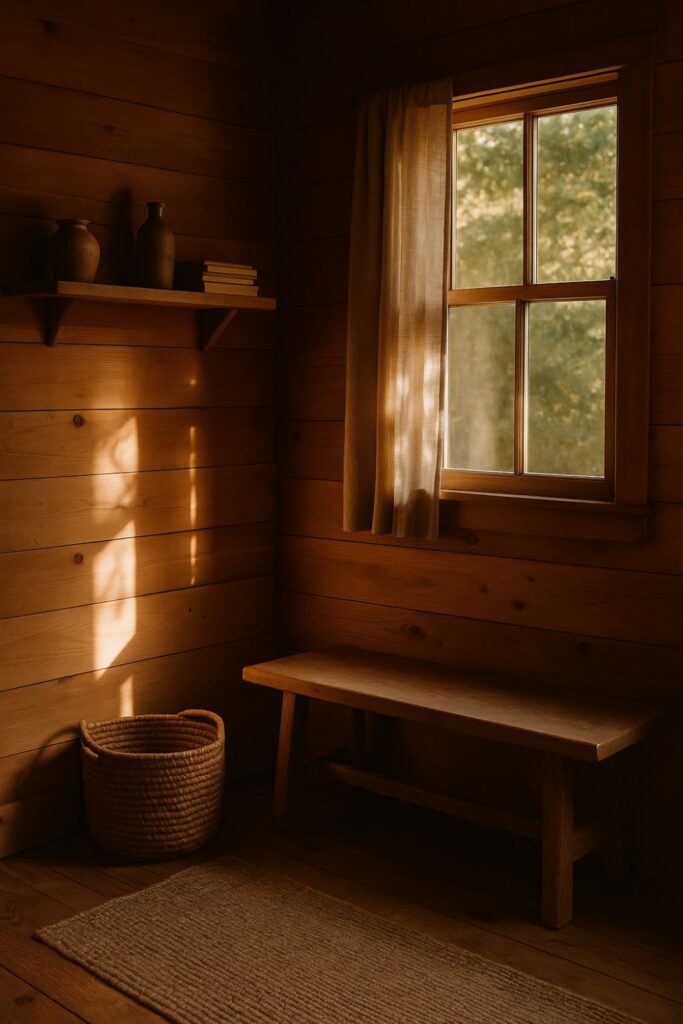
Sunlight loves space. The more cluttered a room, the less freedom the light has to travel. In a tiny home, this means curating what you keep visible.
Use open shelving to display only what adds warmth — pottery, books, woven baskets. Keep surfaces clear so that light can rest upon them without interruption.
Think of light as your most precious guest. Give it room to wander.
Why it works: Minimal clutter enhances the perception of space and allows light to become the true centrepiece of the design.
14. Let the outdoors join in
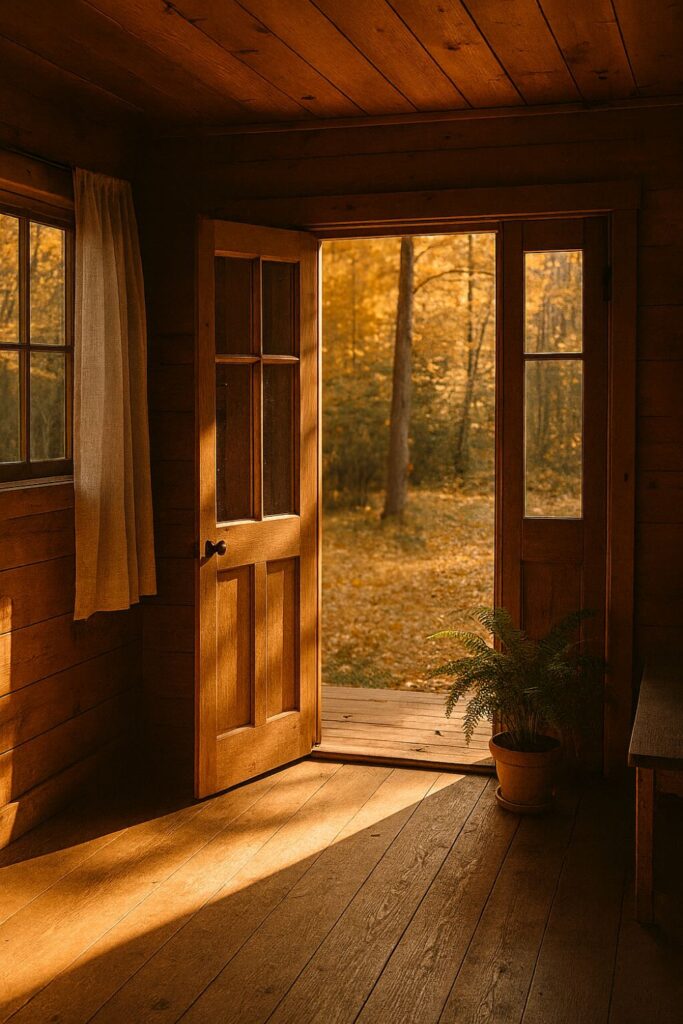
A sun-dappled interior begins outside. Trim back overhanging branches that block light, or plant low ferns that filter it softly. Paint window frames in pale tones to catch and reflect more glow inside.
A porch, deck, or small outdoor step can act as an extension of your light play — a threshold where shadows shift and colours blur.
Keep your doors open on mild days to invite that golden air in. The sound of wind in the trees will complete the illusion that your home and the forest are one.
Why it works: When boundaries blur, your cabin becomes part of the landscape — a vessel for both light and life.
15. Style with seasonal simplicity
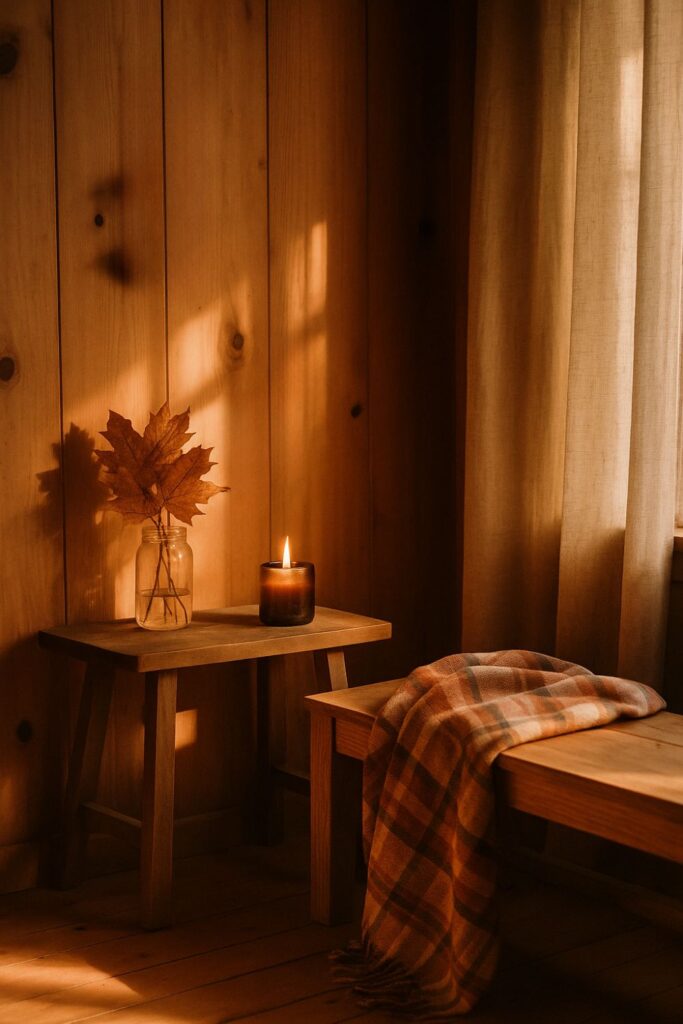
Autumn decor doesn’t have to be loud. A few natural accents — dried leaves in a jar, a branch of berries, or a clay bowl of pinecones — are enough to remind you of the season’s richness.
Avoid plastic or glittered ornaments; let texture and tone do the talking. A muted plaid blanket or candle in a smoky glass holder can feel more evocative than a whole display.
Rotate your decor gently as the light changes. When November arrives, let deeper colours take over, grounding the glow in a sense of stillness.
Why it works: Simplicity allows light to speak for the season, weaving warmth through every quiet object.
Closing thoughts
Autumn light asks nothing of us but attention. In a tiny home, it becomes your most generous design element — one that costs nothing, yet gives everything.
When you build your space around it, you learn to live in rhythm with the day: waking to brightness, resting to glow, always aware of the gentle turning of time.
So throw open your curtains. Brew something warm. Watch as the morning drifts through the trees and settles softly across your table. This is what it means to harvest the light — to live within it, season after season.
If you love the poetry of slow living and off-grid inspiration, join the Elowen Wild community.
✨ Subscribe to the Elowen Wild newsletter for more cabin daydreams, tiny home guides, and seasonal moodboards.
🌿 Follow Elowen Wild on Pinterest to collect your own sun-dappled inspiration.
Every home can hold a little wilderness — you just have to let the light in.